The date palm, the tree that comes to the rescue
No plant appears more often. The palm occurs in some twenty passages, tied at times to the promised garden, at times to daily sustenance.
The most moving passage is that of Maryam, alone, in the pains of childbirth. She is sent neither a crowd nor a remedy: she is shown a trunk to shake.
“Shake toward you the trunk of the palm tree; it will drop upon you ripe, fresh dates.”
Surah Maryam, 19:25
Olive, fig, vine and pomegranate
An entire surah opens with two trees, which is enough to mark their rank. At-Tin begins with the fig and the olive, before Mount Sinai and the secure city.
The olive returns in the verse of Light, where its oil almost gives light of itself — an image of a clarity that owes nothing to fire.
The vine and the palm are named together as two sources of sustenance, and the pomegranate accompanies the palm in the description of gardens.
“In them are fruit and palm trees and pomegranates.”
Surah Ar-Rahman, 55:68
The surahs that carry an animal's name
At least five surahs bear the name of a creature, and it is easy to underestimate what that means. The Book does not treat them as scenery: it makes them titles.
Al-Baqara, the Cow. An-Nahl, the Bees. An-Naml, the Ants. Al-'Ankabut, the Spider. Al-Fil, the Elephant.
The bee receives a revelation of its own and produces a drink of recognised virtue. The ant speaks — and its warning to the colony makes Sulayman smile.
“O ants, enter your dwellings that you not be crushed by Sulayman and his soldiers while they perceive not.”
Surah An-Naml, 27:18
The hoopoe, Sulayman's messenger
Few birds hold such a role. The hoopoe — al-hudhud — is reviewed among Sulayman's forces, noticed by its absence, then returns with news of Saba' that the prophet did not have.
It is mentioned twice in the same surah, at verses 20 and 22. It is one of the rare passages where a creature brings a prophet information he lacked.
The camel and the horse
The camel is given as an invitation to observe, on the same footing as the sky, the mountains and the earth. Looking at the animal is presented as a path to reflection.
The horse is named among the mounts granted to man, and the Sunnah reserves a famous saying for it: goodness remains tied to its forelock until the Day of Resurrection. It is this hadith that made riding and archery encouraged practices rather than mere pastimes.
“Do they not look at the camel — how it was created?”
Surah Al-Ghashiyah, 88:17
Gathering it all in one garden
The idea came simply: if these species are named, why not bring them together somewhere they can be seen?
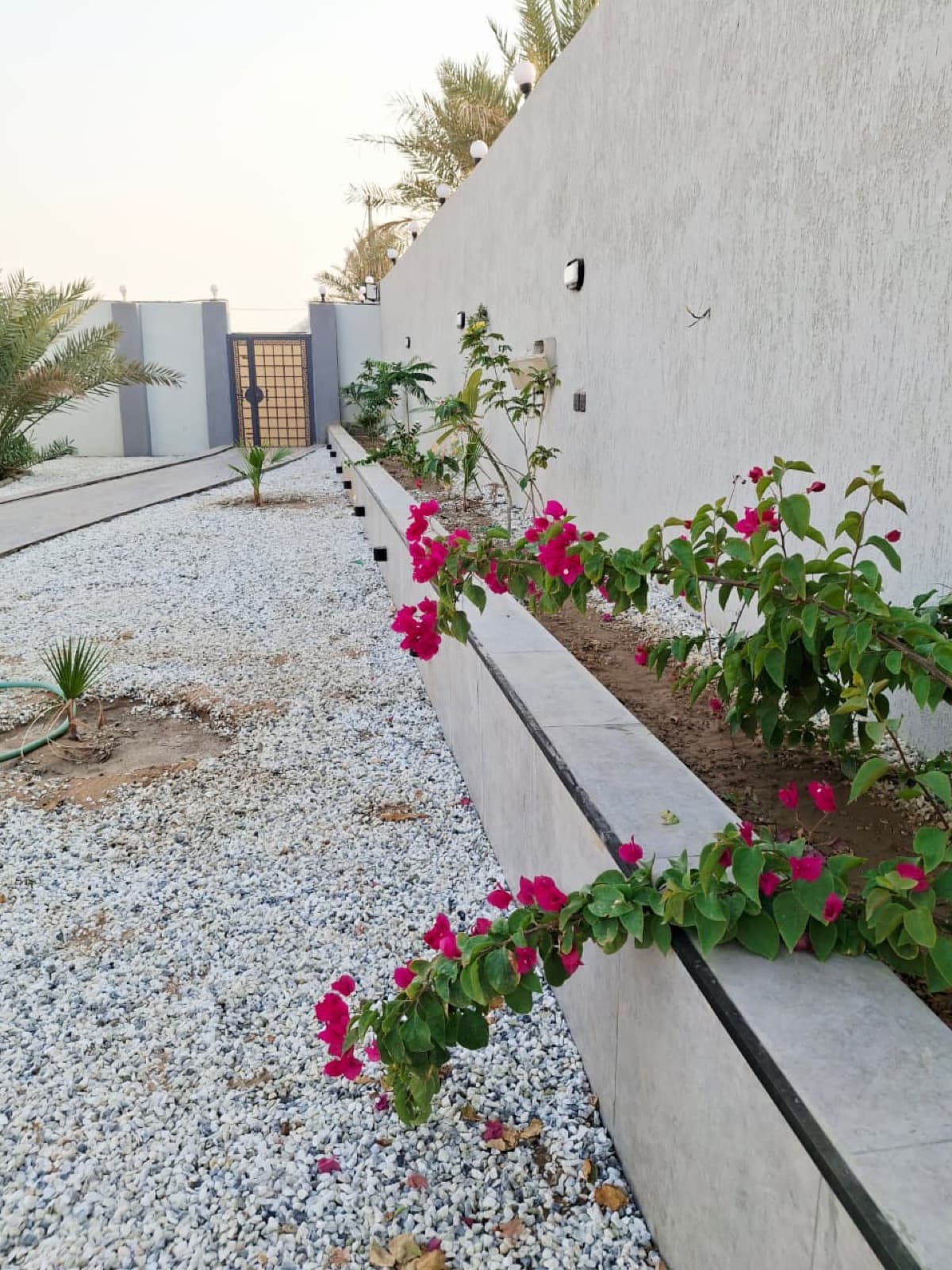
The villa garden is moving in that direction. The palm is at home here, and the climate suits the olive, the fig, the vine and the pomegranate. Among the animals, the horse is already here, and the hive will follow.
It is not finished — we would rather say so — but enough of it exists for a visit to be worthwhile. A child who has shaken a palm trunk will never read the verse of Maryam the same way again.
Come and see
The garden can be visited during group evenings and stays. We accompany the walk with a short commentary — the verse or hadith tied to each species — without ever turning it into a lecture.
Discover the activities